
Expenditures & Engagement
- Community Coordinator Laura Loohuizen started employment in August 2019, to serve as the central point of contact for the partners, organize meetings, track projects, and assist with engagement of area health care staff and the public.
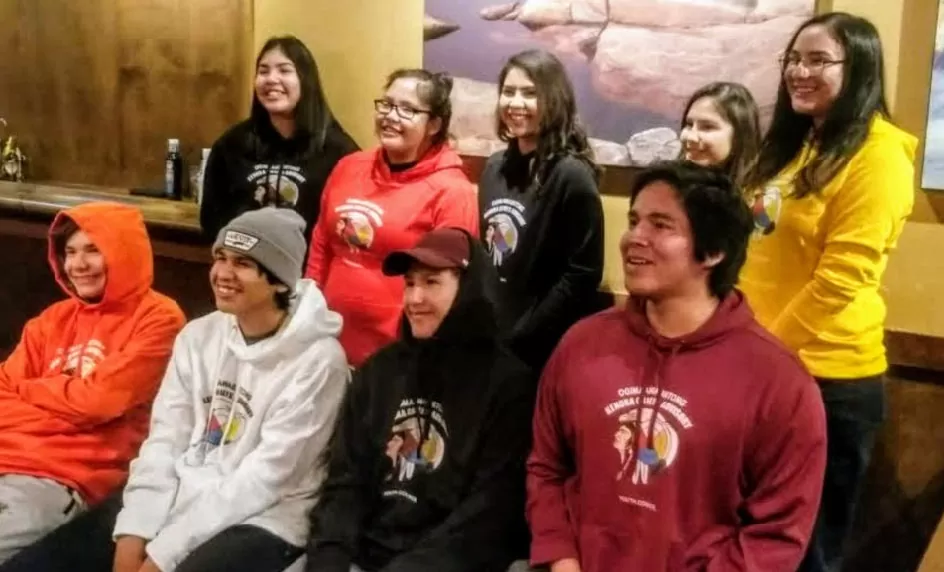
- The Community Coordinator has assisted with engaging First Nations elders, youth, health directors and community members, to share the vision of system transformation, and to hear people’s stories of their families’ health care, avenues to improvements, and priorities.
- During All Nations Hospital clinical services engagement, the Community Coordinator connected with health care workers and enabled them to share their patients’ needs and concerns. She shared the work the ANHP are doing toward system transformation, plus some of the feedback gathered from First Nations community members and workers.
- Dr. Jillie Retson was contracted to conduct a Primary Care study for KCA communities (detailed info below).
- Usman Aslam was instrumental in the development of the OHT application, and continues to assist in several of the working groups, sharing his knowledge and experience.
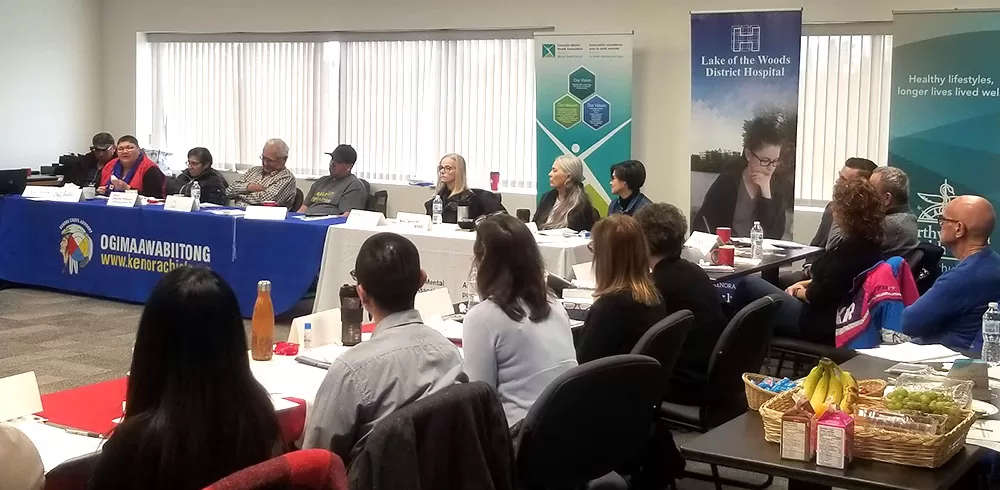
- The ANHP hosted the OHT evaluators in November, and presented their application as a team.
- The ANHP further celebrated their partnership at their OHT announcement in December. Leaders from local First Nations, elders, Municipal and Provincial leaders, health leaders and the public gathered to learn more about the ANHP’s new OHT designation, and how they would be continuing the health transformation they had envisioned several years prior.
Primary Care Summary
As part of All Nations Health System planning and as the intent of the ANHP OHT application identified (see sections 3.1,3.2,3.71,6.4,6.5) increasing access to primary care for our indigenous population and for the area is a top priority.
Research – Key findings and Gaps
Dr. Jillie Retson and KCA engaged 11 First Nations communities in a participatory action research study in the Kenora Area entitled “Expanding Primary Care for First Nations Communities in the Kenora Area” (Retson, 2019). The study identified large gaps in primary care for these communities notably:
- 40% of First Nations on reserve have no regular family doctor
- 50% are waiting up to a month or longer to see a family doctor
- Only 15% have access to same day/next day appointments and 25% were most often seeking primary care in the emergency department
- 60% stated no doctor available in community as top barrier to access
- 45% said they would not have to use the Emergency department if there was a family doctor available in their own community
- Most difficult services to access: cancer screening, Mental health and addictions, palliative care
Seven broad inter-related areas for action with specific recommendations were identified:
- Increase equitable access to primary care providers
- Increase equitable access to primary care services
- Increase cultural sensitivity and decrease discrimination and racism
- Address indigenous determinants of health
- Improve infrastructure, technology and transportation
- Build relationships and partnerships
- Address specific community needs
In response, the ANHP/OHT Primary Care Working group formed in January 2020 with broad representation to continue carrying out the work. The long-term objective, as outlined in the ANHP OHT application will be to continue in the spirit of reconciliation to increase access to primary care for all communities in a collaborative, action-oriented approach that will:
- Create a fully integrated primary care system across the OHT on and off reserve that provides holistic, patient centred and culturally appropriate services
- Put an end to hallway medicine in an upstream approach providing timely access to primary care that decreases ER visits best managed elsewhere, decreases hospitalizations and costly transfers to overburdened tertiary care hospitals and decreases transportation costs
- Utilize digital technologies available to enhance access to remote communities
- Directly link primary care to mental health and addictions both upstream (preventative/early identification) and downstream (post crisis stabilization) for our year one target population.
The OHT will be achieving this objective through the following three steps:
- To develop an expanded model for holistic interdisciplinary primary care on reserve to ensure equitable, culturally appropriate access for First Nations that is sustainable and recruitable for health care providers. This will address the gaps outlined above in the “Expanding Primary are for First Nations Communities in the Kenora Area” report (2019).
- To initiate a parallel process of research/engagement with the remaining population and primary care providers, culminating in the collation of population and provider data to be used in a design event with all stakeholders (providers, administrators, patients) to create a fully integrated All Nations Primary Care model for the Kenora Area as part of the OHT/ALL Nations health system building. This step will mostly involve re- organizing and re-structuring existing primary care models and funding into an integrated model that more directly meets the areas unique needs (i.e virtual rostering)
- To develop an evaluation framework with quality measures (defined by HQO) within the context of the patient medical home going forward (examples) :
- Rate of same day/next day access and timely access to primary care
- Percentage of continuity of care with same provider
- Avoidable ED visits (rate of ED visits best managed elsewhere)
- Patient reported experience measures and provider reported experience measures
Work has already begun to address these steps, but ongoing funding and support will be required to continue the planning and engagement work and to address systemic problems with payment models/contracts available for primary care in remote areas.