
A preliminary report outlining the findings was drafted. However, due to Covid-19 interruptions additional work to complete the inventory of services survey remains active and will be incorporated into final reports in the near future. The report aims to help inform how the ANHP wants their OHT to move forward with providing Home and Community Supports for the members of the All Nations Health Partners.
The next phase of work will be how to use the engagement results to create a framework and delivery model for home care and community supports including how to support ongoing evidence-driven evaluation and continuous improvement of services over time as the Partners and OHT become increasingly harmonized.
COVID-19 Pandemic
Having the ANHP already developed allowed a rapid response to the pandemic. The ANHP built on relationships already formed to turn theory into action. Within a week, partners came together to forge strategies to assist the high proportion of vulnerable persons in our catchment area. Sub-groups were formed and partners’ expert staff enlisted to ensure perspectives of the appropriate cross-sections of the population were considered.
While the partners continue to work together in their previous sub-groups, they created additional sub-groups to manage COVID-related issues since early March, 2020. These sub-groups meet frequently to address emerging needs, and partner organizations are sharing human and financial resources for existing and new programs.
Communication
- A website for the ANHP OHT was created and launched by the Community Coordinator, with the collaboration of the communications team of representatives from partner organizations. www.ANHP.net
- Social media was launched, and since COVID, posts to Facebook and Twitter are made daily, including a daily bulletin with up-to-date COVID stats for the area.
- Radio and newspaper ads have been developed, and hotlines made available for everyone in the catchment area, in both English and Anishinaabemowin.
- Videos in both languages have been produced, with encouragement and instruction from leadership (with consultation from physicians and health professionals), and virtual tours and explanation of the COVID Isolation Centre, for the public’s peace of mind.
- Help-lines, door-to-door flyers, radio messages, newspaper ads and videos focussed on letting people know that the ANHP were available to help them.
- A logo for the ANHP is currently in development by local artists, with advice from area Anishinaabe elders.
Isolation Centre – construction was completed within only six days, with generous donations from area contractors, lumber stores and the public. Partners’ staff worked together to develop new policies, procedures and contracts to fit the needs of the centre. The Centre is serving as a model for other areas of the province, and country.
Testing / Hospital Decanting – another rapid response and collaborative work, with staff from several organizations rotating through the testing centre. Partners have succeeded in shortening the turnaround time for test results by moving lab work from Toronto, to Thunder Bay, to Winnipeg, to Kenora, resulting in test results being available in 45 minutes instead of up to 14 days. This results in much shorter isolation periods for people who are tested. Partner organizations worked together and forged agreements to transfer patients to free up hospital beds in preparation for a potential COVID surge.
Mobile Testing – partnership allows staff from multiple organizations to travel to First Nations communities to test people at their check-points, avoiding the need to travel to Kenora. The Mobile testing vans, combined with the stationary unit staffed by multiple agencies, have also served as a model for other areas of the province, and country.
Mobile Isolation Trailers – partners rallied support for 20 camper trailers to be used for self-isolation at area First Nations during COVID, when over-crowded living conditions warranted their use. The trailers will be used by partner organizations as much-needed on-reserve space for meetings, treatment, supply storage, counselling, etc. after the pandemic.
Primary Care / Emerg Diversion / After-Hours Strategies – to continue regular medical care during COVID, but with different and creative ways of providing care across a broad and diverse geography. Door-to-door flyers were developed to let people know available pathways to care, during COVID. Gaps are being highlighted by the COVID crisis, and strategies to address these needs will continue and adapt to assist in the system transformation.
Human Resources / Talent Pool amongst partner organizations – staff have been flexible and fluid, being shared across organizations as need dictates during COVID; an HR inventory was taken for current and future staff-sharing needsPPE /
Central Repository – partners and First Nations groups without a usual PPE supply chain (e.g. mental health workers) were able to access the PPE they needed during a severe shortage, thanks to a central repository by partners, who shared shipments and successfully lobbied governments for more supply. The public made and donated cloth masks and gowns for use by patients and families at partner organizations.
Corrections – the effects of early release of prisoners has a ripple effect across all communities. Partners are developing strategies for managing this change.
Vulnerable Populations: Homeless Shelter / Seniors Homes and Long-Term Care – ANHP worked together to support the vulnerable populations during the COVID crisis, building an understanding of various organizations’ needs and developing appropriate responses to protect everyone in area communities.
Mental Health & Addictions – work continues during the COVID crisis to address the needs of our Year-One population. A visioning session is being scheduled to help focus partners’ objectives to equitably serve their diverse clients. A joint mobile crisis van is being deployed in June/July to provide up-front services to at-risk populations, including consistent follow-up.
Food Security – Groups and sub-groups formed rapidly to ensure a continuous, reliable supply of nutritious food to vulnerable populations, as well as to assist the general public in feeling secure and empowered in feeding their families. The Food Security group is leveraging and adapting existing programs. Additional funding through the partnership has been secured to allow the group to continue to provide food services for the next year, as needed. A university research project is launching to assist partners in identifying food security issues on First Nations, and what potential solutions can be developed to build food sovereignty. Traditional Healing – safe Anishinaabe ceremonies during COVID were presented in person, by video messages and through flyers to communities and across the ANHP area. Elders continue to provide advice on ways to practice traditional healing, while being mindful of physical distancing during this crisis. Their messages are being shared through video, and in writing in English and Anishinaabemowin.
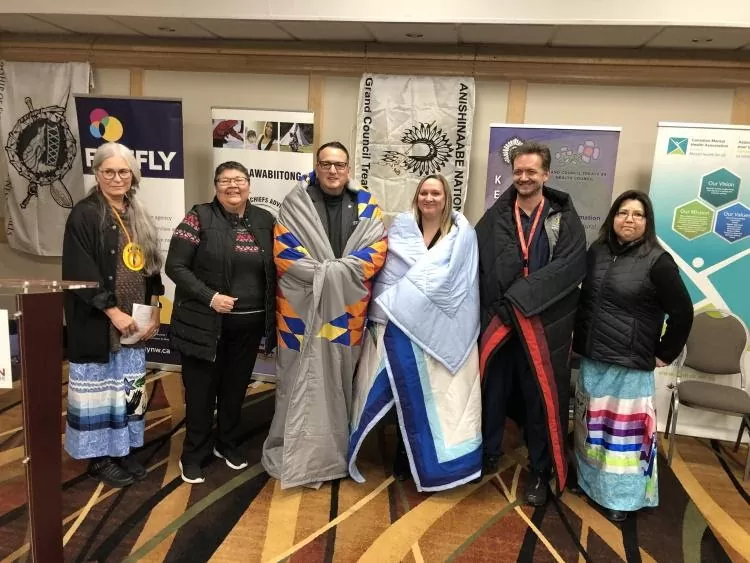
This is the most unique and important health system transformation work our region has seen. It will significantly raise the bar in terms of the scope and quality of services delivered and will be a historic step towards reconciliation. We are stronger together and we will not only build a state-of-the-art healthcare system but we will build a legacy of collaboration, inclusiveness, and sensitivity that will benefit future generations to come.
Dr Jillie Retson
ADVANCING ACTIVITIES BEGUN IN 2019/20
2020/21 KCA ALL NATIONS HEALTH PLANNING WORKPLAN (FOR CONSIDERATION):
| Objectives | Activities to Accomplish Objectivities | Deliverable(s) |
| Continue to advance activities begun in 2019/20 | Continue with 2019/20 staffing: Community coordinator, professional experts to support guidance in facilitating community-driven change | |
| Continue work related to the 10 Working Group ‘buckets’ | Communication StrategyCross Border (Manitoba) IssuesDigital ConnectivityGovernanceHome and Community Care Support ServicesHomelessness and HousingMental Health and AddictionsPrimary CarePublic HealthRecruitment | |
| Undertake Improved access to health information to inform care (Digital Connectivity) | Pilot All Nations Health Partner/Ontario Health Team Interoperability Model Solution | Proof of concept implemented (and assessed) |
| Weave Post COVID19 best practices within 2020/21 system planning activities | Integrate KCA specific COVID19 best practices within the planning and development of a health model | |
| Include an expanded model for wholistic, interdisciplinary primary care on reserve (Primary Care) | Continue the development of an expanded model for wholistic, sustainable interdisciplinary primary care on reserve |
In light of COVID (eg. Travel restrictions), the work completed in 19/20, and your anticipated activities, are the projected allocations within your budget remaining the same as 19/20?
| Annual | |
| CONSULTING FEES/PROFESSIONAL FEES | 200,000.00 |
| PROGRAM SUPPLIES | 25,000.00 |
| TRAVEL/MEETING COSTS | 50,000.00 |
| SALARIES and Benefits | 100,000.00 |
| Expenditures total | $375,000.00 |
Download This Report (PDF)